Technology is evolving faster than ever — and with it, software development practices are transforming too. Traditional development models are now being replaced by flexible, collaborative, and iterative approaches that deliver better results in less time.
At the center of this transformation is the Agile Methodology — one of the most trusted and widely used software development frameworks in 2025. Agile has become a global standard for companies seeking faster deliveries, higher-quality products, and stronger team collaboration.
If you’re considering Agile software development for your organization, here’s exactly why it can be a game-changer for your business.
What Is Agile Methodology?
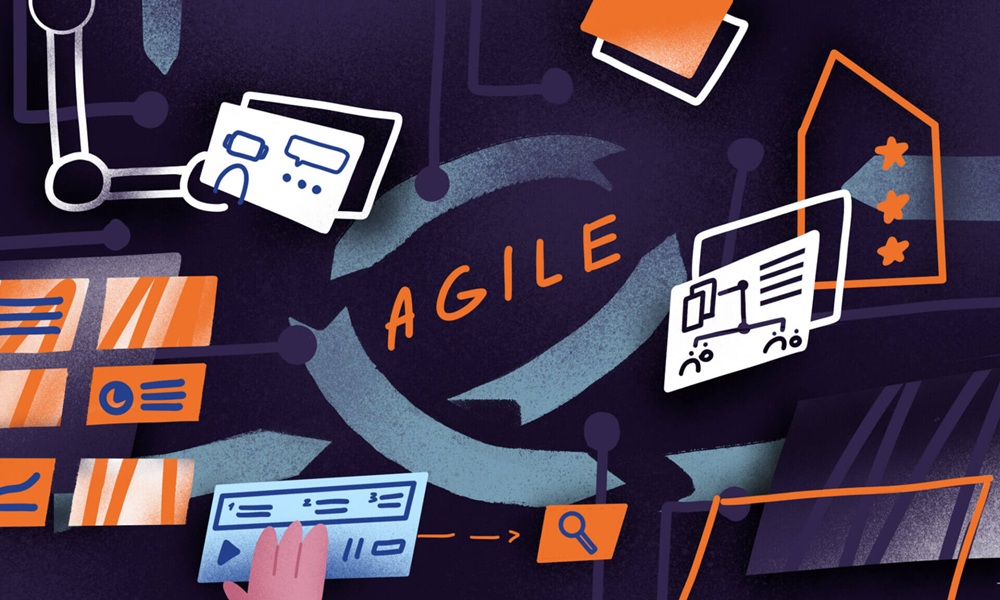
Agile is a collaborative, iterative, and flexible approach to software development. Instead of delivering one large project at the end, Agile breaks the process into:
- Small development cycles (sprints)
- Continuous feedback loops
- Early releases
- Rapid improvements
- Customer involvement at every stage
In Agile, the development team and client (stakeholders) work closely together, ensuring the final product aligns perfectly with business needs and user expectations.

Key Benefits of Agile Software Development
1. Higher-Quality Products
One of the biggest strengths of Agile is its continuous testing and reviewing approach. Because both the client and development team participate actively:
- Requirements stay clear
- Changes are applied early
- Bugs are spotted quickly
- Product quality improves naturally
This collaborative process leads to polished, stable, and user-ready software.
2. Reduced Risks & Fewer Errors
Agile eliminates risks by continuously refining the product.
Why it works:
- Multiple experts are reviewing every step
- Issues are detected early
- Misunderstandings are resolved instantly
- Every iteration improves the previous one
Instead of discovering problems at the end, Agile identifies errors throughout development — drastically reducing failures.
3. High Flexibility
Unlike traditional software models, Agile embraces change.
Even after development begins, the client can request modifications, new features, or improvements.
Agile allows:
- Real-time changes
- Feature enhancements
- Adaptation to evolving business needs
- Smooth pivoting
This makes the product future-ready and highly adaptable.
4. Focus on Business Priorities
Agile development prioritizes what matters most.
Features are built based on:
- Business goals
- Customer needs
- High-impact areas
This ensures that the most valuable parts of the software are delivered early — giving your business a competitive edge.
5. Stronger Team Engagement
Agile thrives on teamwork and transparency.
Every team member — including the client — has a role.

This results in:
- Better collaboration
- Higher morale
- Continuous communication
- Shared responsibility
- Faster problem solving
Engaged teams simply produce better products.
6. User-Oriented Development
Agile is designed to create user-first products.
With the client participating throughout the process, the final output is:
- Customized
- Aligned with requirements
- Intuitive
- Easy to use
- More functional
Users can also request improvements even after deployment, keeping the software aligned with real-world needs.
7. Higher Customer Satisfaction
Because clients stay deeply involved — from planning to delivery — they always know what to expect.
This transparency leads to:
- Zero surprises
- Clear understanding
- Greater trust
- High satisfaction
Customers trust the product because they helped shape it.
8. Time-Efficient & Fast Delivery
Agile is one of the fastest development approaches thanks to:

- Multiple experts working simultaneously
- Short sprints
- Quick feedback cycles
- Early releases
This enables teams to ship software 3x faster than traditional methods in many cases.
9. Increased Scalability
Agile-developed software is built with scalability in mind.
As your company grows, the software can:
- Expand
- Adapt
- Improve
- Integrate new features
No need to rebuild your system — Agile ensures long-term sustainability.
Final Thoughts
Agile software development is not just a trend — it’s a proven strategy that helps businesses innovate, scale, and deliver high-quality products with reduced risk and enhanced teamwork.
If your goal is to build flexible, future-ready software while boosting your operational value, Agile is one of the smartest approaches you can adopt in 2025 and beyond.